

Inside One Parcel’s Journey, and the Waiting Time Nobody Shows You on the Tracking Page
We followed one regular parcel from Jakarta to Bekasi and logged the time at every handoff. Here is what really happens behind the “in transit” status.
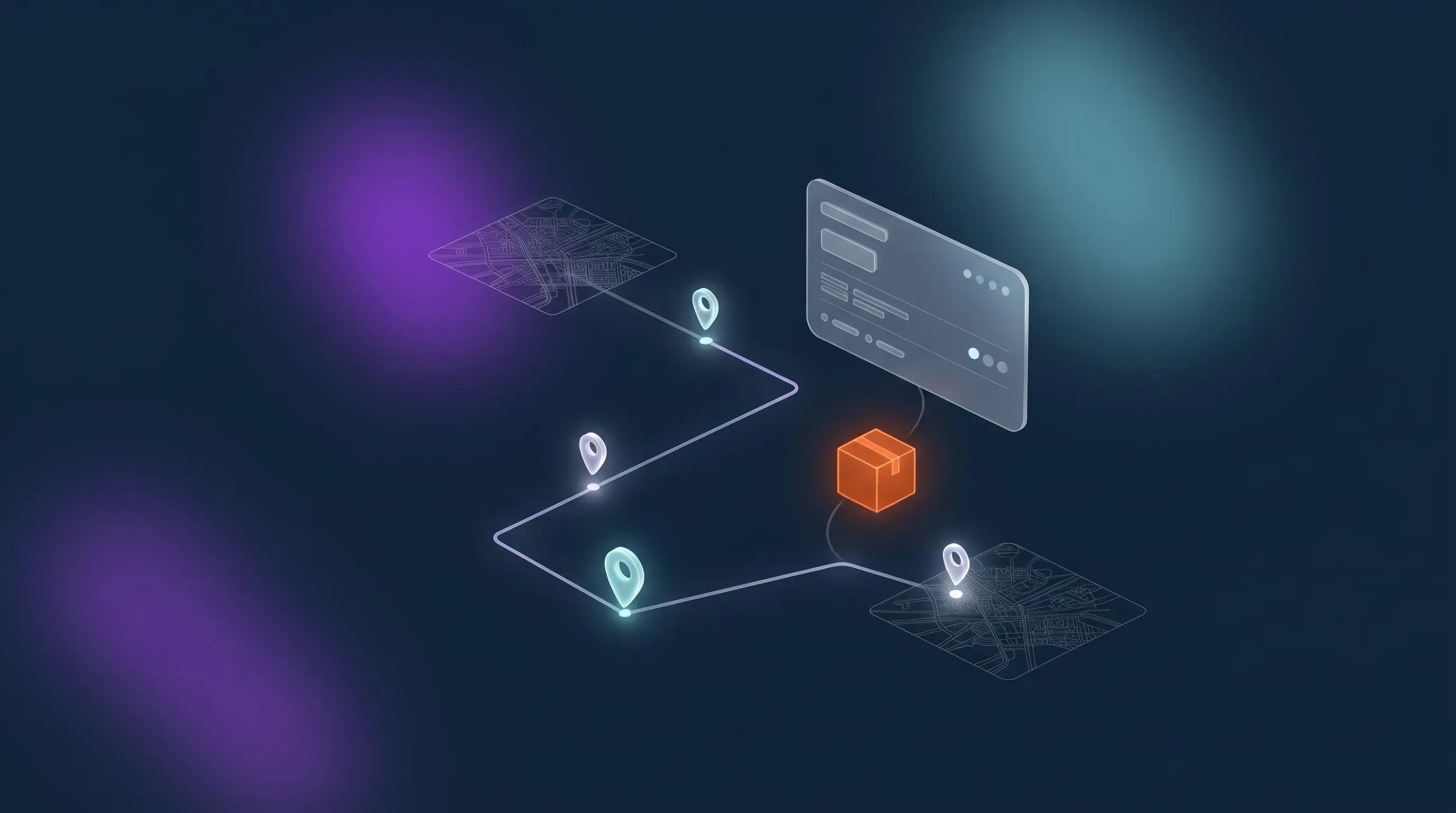
A regular parcel from Jakarta to Bekasi takes a median of about 30 hours from order to delivery, even though the two cities are only tens of kilometers apart. According to Biteship shipment data, most of that time is not spent on the road but waiting for pickup and queuing at the courier’s hub. How fast a local delivery arrives depends more on how many times the parcel changes hands than on the distance.
To see what happens at each stage, we traced one real parcel with the Biteship Operations team. It contained FMCG goods, shipped from Grogol Petamburan in West Jakarta to North Bekasi on a regular service. The total time was 29.7 hours, slightly under the JNE REG median for this route (31.1 hours), so the journey reflects an ordinary day.
The order was created at 06:10 WIB (Western Indonesia Time), about eight hours before JNE’s 14:00 cut-off. Even so, the courier only picked it up at 16:43, because pickups run in batches along the courier’s route.
The Journey of One Parcel from West Jakarta to Bekasi
The journey splits into four stages, and each stage has its own waiting time.
Stage | What happens | Time the sample parcel spent |
1. Order, waybill, and waiting for pickup | The seller creates the order, the waybill is issued, and the parcel waits to be collected | About 10.5 hours until pickup |
2. Pickup (first mile) | The courier collects the parcel and takes it to a consolidation point | Included in the 10.5 hours above |
3. Middle mile | The parcel is sorted at the hub and sent to the destination city | About 19 hours from pickup to delivery |
4. Last mile | The courier in the destination city delivers the parcel to the recipient | Included in the 19 hours above |
The pattern matches thousands of other parcels on this route. Based on Biteship internal data for October 2026 orders, the median time from order to pickup for regular services from Jakarta to Bekasi ranges from 7 to 13 hours, and the median from pickup to delivery is about 19 to 24 hours, depending on the courier.
Stage 1, Order Placed and Waybill Issued
Once a seller creates an order, the system issues a waybill and forwards the pickup request to the courier. According to the Biteship Operations team, how the waybill is created also affects how fast the parcel can be collected. A waybill that is booked straight away is processed faster than an order saved as a draft, because a draft has not yet entered the pickup schedule.
The hour of the order matters as well. Each courier has a daily cut-off for same-day pickup. According to the courier cut-off schedule in the Biteship help center, the limits include 14:00 for JNE, 14:59 for SiCepat, 15:59 for J&T, and 16:00 for Lion Parcel. An order created after that time is usually picked up the next day.
Stage 2, Pickup, the Most Underestimated Part
Waiting for pickup is the largest part of the journey that a seller can control, and the part people watch least. On the Jakarta to Bekasi route, the time from order to pickup alone can reach a third of the total delivery time.
Pickups run in batches. A courier collects parcels from many sellers along one route, so the courier’s arrival time follows the route, not the hour each seller placed the order. On the seller side, the most common causes of late pickup are a parcel that is not ready when the courier arrives, an unclear pickup address, and an order created after the cut-off. On the courier side, the cause is usually weather and operating conditions on the ground.
In Biteship data for regular shipments from Jakarta between 5 and 9 October 2026, about 40% of parcels were picked up between 09:00 and 12:00, and about half of the sellers who sent five or more parcels through one courier handed over all of them in a single pickup window.
If a courier is more than 30 minutes late for the scheduled pickup, check the order status under Shipping > Orders in the Biteship Dashboard, then contact Biteship support with the waybill number and the pickup schedule, as described in the Biteship help center guide. Rescheduling a pickup currently carries no extra charge.
“On the road, the trip from Jakarta to Bekasi takes only a few hours. What makes a parcel take more than a day is waiting to be picked up and queuing at the hub. The first part is the one sellers can control the most, simply by booking the waybill earlier and before the cut-off,” said Yuda Faisal Putra, Head of Operations at Biteship.
Stage 3, Arrival at the Hub and Sorting
Even a local parcel goes through a hub, because the hub is where a courier gathers parcels bound for the same destination so they can be delivered efficiently. The Biteship Operations team explains that for destinations within one city, a parcel generally needs only one sort before it is handed to the delivery courier.
This is the stage where tracking often looks frozen for hours. According to the Operations team, the cause usually lies in the transport schedule after the parcel leaves the hub. The parcel waits for the next vehicle to depart according to its mode and timetable, so no new status appears even though the parcel is queuing to be dispatched.
Stage 4, Delivery to the Recipient
In the last mile, the courier in the destination city delivers the parcel to the recipient’s address. According to the Biteship Operations team, 98% of parcels are delivered on the first attempt. In the Greater Jakarta area, the most common causes of failed delivery are weather, office addresses that are already closed when the courier arrives, and out-of-town parcels that usually reach the courier only in the afternoon.
The last mile is also the hardest stage to escalate, because every parcel has a different address and different conditions. How well a problem gets resolved depends heavily on a complete address and a reachable phone number for the recipient.
What If the Same Parcel Goes by Instant Service?
If the same parcel goes by instant service, total time drops from about 30 hours to under an hour and a half. Instant service skips the hub and the batched pickup, because a single driver takes the parcel straight from sender to recipient.
Service (Jakarta to Bekasi, period October 2026) | Order to pickup | Pickup to delivery | Total |
Regular (J&T EZ) | 8.8 hours | 20.0 hours | 29.7 hours |
Regular (JNE REG) | 12.2 hours | 19.8 hours | 31.1 hours |
Same day (Grab) | 1.4 hours | 2.5 hours | 3.9 hours |
Instant (GoSend) | 0.2 hours | 1.1 hours | 1.3 hours |
Instant (Grab) | 0.2 hours | 0.4 hours | 0.7 hours |
The figures above are medians from Biteship internal data. Each column’s median is calculated separately, so a total does not always equal the sum of the two columns before it. The biggest gap is in the wait before pickup, not in speed on the road. Instant service costs more and has a distance limit, generally 20 to 30 km depending on the courier, as explained in the Biteship guide to instant and same-day delivery.
What If the Destination Is Another Island?
For destinations on other islands such as Makassar, the wait for pickup is about the same as on the Bekasi route, but the journey after pickup is far longer. According to the Biteship Operations team, next-day service to other islands requires air freight, while economy service uses sea freight because it costs less.
Service (Jakarta to Makassar, period September to October 2026) | Order to pickup | Pickup to delivery | Total |
Lion Parcel REGPACK | 6.7 hours | 38.7 hours | 1.9 days |
JNE REG | 12.2 hours | 45.3 hours | 2.8 days |
J&T EZ | 7.2 hours | 64.1 hours | 3.0 days |
SiCepat REG | 7.5 hours | 71.4 hours | 3.6 days |
As in the previous table, each column is its own median. The comparison shows that on long routes, the choice of transport mode and the courier’s transport schedule matter more than how fast the pickup is.
What Changes on Double-Date Sale Days?
On double-date sale days such as 11.11 and 12.12, the median time for a regular Jakarta to Bekasi parcel is about two hours slower, and the extra time appears at the hub, not at pickup. Based on Biteship internal data for double dates from June to October 2026, the median total delivery time rises from about 30 hours on a normal day to about 32 hours, while the wait for pickup barely changes.
The biggest surge on double dates actually happens in fulfillment warehouses, from brands that store stock in Biteship warehouses. For regular shipping orders, the heaviest load falls on couriers carrying parcels from pickup points and on courier hubs. According to the Biteship Operations team, the longest queues on double dates form at the hubs, because a hub consolidates parcels from many warehouses and marketplaces at once. The scale is large. Katadata reported that transactions during Harbolnas, Indonesia’s national online shopping festival, reached Rp36.4 trillion in 2025, and the government targets Rp40 trillion for 2026.
In other words, a seller’s parcels queue up together with the surge of parcels from the whole market. In periods like this, the Biteship Operations team mostly works on the volume forecast side together with the couriers.
What Happens When a Parcel Fails Delivery or Returns to the Sender?
A parcel that fails delivery does not disappear from the system: the courier retries according to the courier’s rules, and if delivery still fails, the parcel is returned to the sender. One waybill covers one parcel journey from start to finish. If the parcel fails and needs to be sent again, the next shipment uses a new waybill.
For sellers, the key to fewer failed deliveries is recipient data. A complete address, a clear landmark, and an active phone number help the courier finish delivery on the first attempt.
How Sellers Can Cut a Parcel’s Waiting Time
Sellers can shorten delivery time without changing courier, simply by managing the parts of the journey they control.
- Create the order before the cut-off. Process and book the waybill before the pickup limit of your main courier, rather than piling orders up in the afternoon.
- Book the waybill right away, do not save it as a draft. An order that is still a draft has not entered the pickup schedule.
- Choose the service that matches your promise to the buyer. For buyers in the same city who need it fast, instant or same-day service cuts almost all of the waiting time.
- Complete the recipient data. Address, landmark, and an active phone number reduce the risk of failed delivery in the last mile.
- Line up a backup courier before double dates. When one courier’s hub is congested, another courier on the same route can be an alternative.
The simplest way to measure the effect is to compare the time from order to pickup before and after you change your work schedule. If the wait for pickup drops by a few hours, total delivery time will drop with it.
The Biteship Operations Team Behind Every Parcel
The Biteship Operations team keeps every delivery stage moving and steps in when a parcel stalls, at pickup or at delivery. They work between sellers and more than 30 couriers, with a Control Tower team that monitors pickup and delivery every day.
- Daily consolidation by Control Tower. Every day, the Control Tower team gathers all pickups and deliveries that are still pending. They push and escalate to couriers using a priority matrix based on aging, so the parcels held up the longest are handled first.
- One door for complaints. Seller complaints come in through Biteship CS, are passed to the courier’s CS, and then to the first-mile or last-mile branch handling the parcel.
- Regular reviews with couriers. In monthly business reviews, the team goes over pickup performance, delivery performance, complaints per shipment, handling time, return performance, and courier promo programs.
- Standardized tracking statuses. Statuses from different couriers are grouped into first mile, middle mile (transit and sorting), and last mile (delivery), so sellers see the same format whichever courier is used.
“Every month we sit down with the couriers to go through pickup, delivery, returns, and complaints per shipment. From that, we know at which stage parcels get stuck most often, and that is what we push to fix together,” explained Yuda.
The Operations team monitors each courier’s performance with delivery data in Biteship itself, not with the couriers’ own claims. Pickup SLA is the percentage of parcels actually picked up within the promise of the courier’s service, while Delivery SLA is the percentage of parcels delivered within the service estimate on the first attempt. From August to September 2026, courier Pickup SLA at Biteship ranged from 95% to 98%, and first-attempt Delivery SLA from 94% to 96%.
Understand the Journey, Then Set Your Delivery Promise
A local parcel takes about 30 hours not because of the distance but because of the waiting at pickup and at the hub. By creating orders before the cut-off, choosing a service that matches the promise to buyers, and lining up a backup courier, sellers can cut that waiting time without a large added cost.
Whatever stage your business is at, Biteship can keep your shipping operations in order. From one dashboard, you can compare rates from 30+ couriers, print waybills, schedule pickups, and track parcels. If you already have your own website or app, the Biteship Shipping API connects all those couriers through one integration, including the JNE API integration and other couriers. As orders grow, Biteship fulfillment, with warehouses in Jakarta, Bandung, Surabaya, Medan, and Makassar, can handle your stock through to delivery. Start with a free rate check, or contact the Biteship team to find the solution that fits your business best.
FAQ About a Parcel’s Journey
Why Does a Local Parcel Still Take More Than a Day?
Because a regular parcel is not delivered straight from sender to recipient. It waits for a batched pickup, then goes into a hub to be sorted with other parcels bound for the same destination. These two waiting stages are why a Jakarta to Bekasi delivery takes a median of about 30 hours.
Why Does My Parcel Status Not Change for Hours?
Usually the parcel is waiting for the next vehicle after leaving the hub. While it waits for the transport schedule, there is no new scan, so the status looks frozen. This is normal as long as the status moves again within the service’s estimated time.
What Is the Difference Between Regular, Same-Day, and Instant for Local Delivery?
Regular goes through batched pickup and a hub, so it takes about a day or more. Same day is scheduled to arrive on the same day, and instant is delivered straight away by a single driver within hours. On the Jakarta to Bekasi route, the instant median in Biteship data is under an hour and a half.
Are Parcels Slower on Double Dates?
Slightly. In Biteship data, regular Jakarta to Bekasi parcels on double dates arrive about two hours later than on a normal day, based on medians, mainly because of queues at the hub. Creating orders earlier and lining up a backup courier helps reduce the impact.
What Should a Seller Do When There Is a Shipping Problem?
Report it through Biteship CS, the single door for complaints. The team passes it on to the courier’s CS and the branch handling your parcel, at pickup or at delivery, so sellers do not have to contact each courier one by one.
About the author

Head of Operations
Yuda Faisal Putra is Head of Operations at Biteship, where he leads the team that keeps shipments moving between sellers and more than 30 couriers. His team monitors pickup and delivery performance daily and reviews it with courier partners every month.
Tags
Related articles

November 18, 2026
Does Your Business Need Same-Day Delivery Yet?
Same-day delivery pays off when orders cluster in one city, buyers want them today, and the extra margin covers the shipping subsidy.

November 12, 2026
When Orders Spike 6x, Your 12.12 Logistics Plan Is Already Too Late
How Indonesian online stores can prepare shipping for Harbolnas 12.12 with courier cut-offs, a backup courier, and holiday deadlines.
November 5, 2026
The Post-Purchase Blindspot: Why Ignoring Logistics Infrastructure Drains Business Revenue
Discover the hidden danger of the Post-Purchase Blindspot in e-commerce. Learn why ignoring back-end logistics infrastructure ruins marketing ROI and how Biteship automates fulfillment to secure customer retention.